Last updated: October 21, 2026
Quick Answer: For most people, emergency fund account access is best set up as transfer-first, with debit card access only if you need same-day cash. In many banks, an internal transfer can move money in one business day or less, while ATM cash is immediate if the card works. The topic is emergency fund account access: debit card, transfers, or bank visit?
Key Takeaways
- Speed, control, and backup access matter more than a single “best” method.
- Debit cards are fastest; transfers add friction; branches help when the other two fail.
- A debit card suits people who need near-instant cash and can avoid impulse spending.
- Online transfer works well for households that want access without making savings feel spendable.
A useful emergency fund access plan is less about where the money lives and more about how quickly you can turn it into usable cash. That means comparing debit card access, ATM withdrawals, online transfers, and a bank branch visit by speed, limits, and failure points. I write about personal finance and bank account design with one question in mind: what actually works at 7 p.m. on a Friday when the roof leaks or the car won’t start?
The real choice is speed versus control

Therefore, the real choice is speed versus control, not debit card versus transfer in a vacuum. Debit card and ATM access win when the money has to be available immediately. Online transfer wins when the emergency is real but not time-critical, because it keeps the fund a step away from daily spending. A bank branch visit is the slowest and most cumbersome option, but it can solve situations where cards are blocked, limits are tight, or a cashier’s check or certified withdrawal is needed.
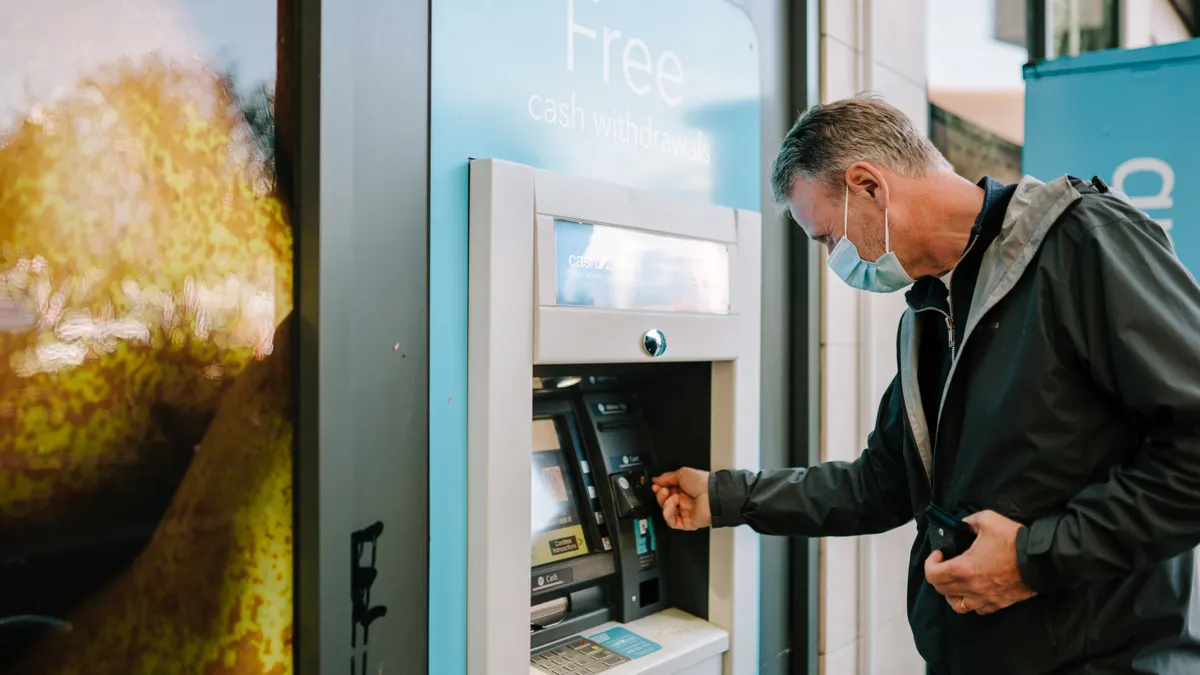
A debit card tied to the emergency fund account gives the shortest path from account balance to spendable funds. In practical terms, that matters because many ATMs and point-of-sale terminals process card transactions instantly or within minutes. The drawback is obvious: if the card is in your wallet, the money is too easy to touch. That is fine for disciplined users, risky for anyone who routinely dips into savings for nonemergencies.
Online transfer sits in the middle. Moving money from the emergency fund into a checking account gives you a record, a little friction, and usually one business day or less depending on the bank and transfer rail. Some banks offer instant internal transfers between their own accounts; others do not. That difference matters more than people think. A transfer that takes until the next business day is still fast enough for many repairs, but not for a tow truck that wants payment now.
A branch visit is the least convenient option, but it remains the backup when digital access fails. If you need a teller to verify identity, lift a transaction limit, or issue a cashier’s check, the branch can still be the cleanest fix. It is not the first choice for a true emergency if the branch is closed, which is why relying on branch access alone is a weak plan.
For the broader framework of where money should live and how access should be structured, the hub page on emergency fund storage and access covers the companion decisions this page does not. For transfer timing basics, the CFPB explains how payment timing and bank rules affect access. For deposit-account safety, the FDIC is another authoritative reference.
The honest side-by-side: debit card, transfer, or branch?
The debit card wins on speed; the transfer wins on control; the branch wins only when the first two are blocked. Here is the decision in plain terms.
| Criteria | Debit card | Online transfer | Winner for [condition] |
|---|---|---|---|
| Speed to usable money | Usually immediate at ATM or purchase terminal | Often same day or next business day; instant internally at some banks | Debit card for same-hour needs |
| Friction before spending | Low | Medium | Online transfer for stopping impulse use |
| ATM cash access | Yes, if the account/card allows it | No, unless transferred first | Debit card for cash withdrawals |
| Need for internet or app access | Not required for ATM use | Required | Debit card when phone service is down |
| Exposure to card loss or fraud | Higher, because the card can be stolen or copied | Lower, because funds stay in account until moved | Online transfer for security-conscious users |
| Typical backup value | Good if the card works and limits are adequate | Good if you can wait for posting time | Transfer for planned emergencies |
| Branch dependence | None for basic withdrawal | None | Debit card or transfer, depending on urgency |
| Ability to document the withdrawal | Limited unless you check records separately | Stronger paper trail | Transfer for budgeting and tax records |
| Works if ATMs are down or out of cash | Not reliably | Yes, if the transfer rail works | Transfer for system failures |
The table points to the same answer most of the time: keep transfer access available, and keep debit card access only if you can trust yourself with it. Debit card access is not “better” just because it is faster. Faster can be worse if it makes the fund too easy to raid for convenience spending.
The bank branch belongs in the emergency plan, but not as the primary method. A branch visit is a contingency for when a card is lost, an ATM is unavailable, or a bank insists on identity verification before a larger withdrawal. It is also the slowest route because it depends on hours, location, and staffing. A working branch nearby is helpful; a branch-only plan is fragile.
When a debit card makes sense
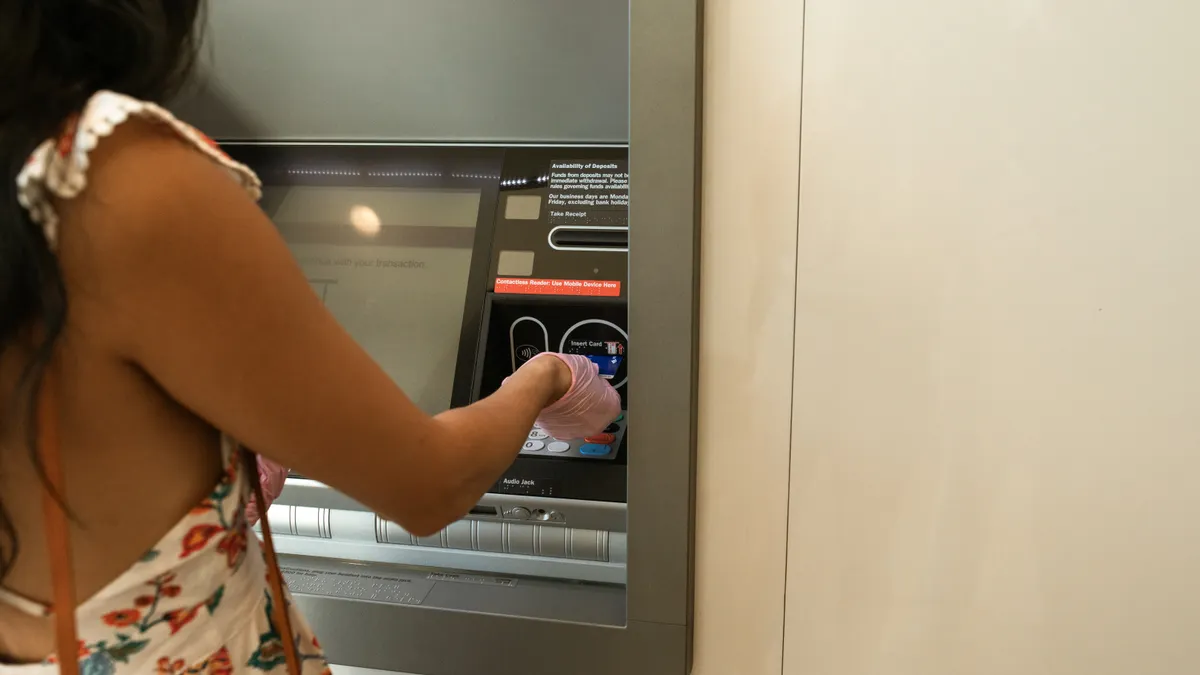
A debit card wins for someone who needs cash access with almost no delay and can handle the temptation. That means a renter with a stable job, a driver who may need roadside cash, or a person whose bank network has good ATM coverage and low friction for withdrawals. If an emergency often turns into a same-day cash need, the card is the cleanest access tool. If you are unsure whether that level of access fits your situation, consider speaking with a financial professional.
The strength of debit card access is operational simplicity. If the account is linked to a card and the card is active, the emergency fund can be used at the nearest ATM or merchant that accepts that network. That matters when the problem is not abstract. A mechanic may not wait for an internal transfer to clear. A hotel deposit can require immediate card payment. In those moments, the debit card beats any slower route.
The weakness is discipline. A debit card collapses the distance between “protected savings” and “pay now.” If the card is already in a daily wallet, a nonemergency temptation becomes easier to justify. That is the price of convenience. Another drawback is access risk: cards expire, get demagnetized, get blocked for fraud, or hit withdrawal limits. The bank can also cap daily ATM withdrawals, and those caps are not the same across institutions.
Debit card access is also a poor choice if the emergency fund is meant to stay out of sight. A person rebuilding finances after debt payoff or income instability may need more friction, not less. In that case, a debit card can work against the whole point of the fund.
The debit card is the right answer when speed matters more than restraint and when the account’s ATM limits are high enough for likely emergencies. It is the wrong answer for anyone who treats a spare balance like spending money within 24 hours, so consult a financial professional if that describes your situation.
When online transfer wins
Online transfer wins for most households because it gives access without making the fund feel spendable in the moment. If the emergency can wait long enough for an internal transfer, this is the cleaner option. It is especially good for people who keep their emergency fund at the same bank as checking or who use a bank with fast same-bank transfers. Even a one-business-day wait is acceptable for many bills, repairs, and medical balances that do not require immediate cash.
The main strength here is control. Moving money from savings to checking forces one deliberate step. That step is enough to slow a rash decision, and it creates a record that is useful when you later try to rebuild the fund. Transfers also avoid carrying a debit card tied directly to the reserve. For someone who wants access without constant temptation, that is the right balance.
The downside is timing. Not every bank offers instant internal movement. External transfers can take longer, especially if they route through ACH and cross institutions. If the emergency requires cash now, a transfer can be too slow. It also depends on digital access: a locked phone, poor signal, or app outage can block the move at exactly the wrong time. That does not make transfers bad; it makes them less universal.
Online transfer is the best fit for a person who wants emergency money available but not mentally “in reach.” It also works well for larger emergencies where you know the bill is coming but do not need to pay in front of a technician or teller. If the emergency is a late-night tow, the transfer may be one step too slow. If the emergency is a medical bill due tomorrow, it is probably ideal.
For practical bank features, the key terms to check are internal transfer timing, external ACH timing, and whether your bank allows same-day movement between linked accounts. Those details matter more than brand slogans. The Consumer Financial Protection Bureau and the FDIC both publish plain-language guidance that can help you compare bank access rules.
What a bank visit is actually good for
Since a bank visit is the fallback route, it wins only in specific situations, but those situations are real. If your card is lost, your phone is dead, your online banking is locked, or you need a withdrawal type that cannot happen online, the branch can still save the day. A teller can also help when you need to withdraw a large amount, verify identity, or request an alternative payment instrument such as a cashier’s check.
The value of the branch is not speed; it is human problem-solving. A branch can unblock a frozen account, explain a pending hold, or help after fraud has triggered a card restriction. That makes it a useful fallback in a layered emergency plan. It is not a good first-line access method because it depends on hours and geography. A “same-day” branch plan fails if the branch closes at 5 p.m. or the nearest location is across town.
The other drawback is inconvenience under stress. When people are already dealing with a flat tire, a power outage, or an urgent home repair, adding a trip to a branch is a lot to ask. If the money is in a bank with limited branches, the plan is weaker still. Some people also assume a branch gives unlimited flexibility. It usually does not. Identity rules, withdrawal limits, and fraud checks still apply.
A branch is best viewed as a backstop, not a strategy. Keep it in the plan, but do not make it the primary route unless your situation makes cards and transfers unreliable. That might include someone who has irregular internet access, someone recovering from account security problems, or someone dealing with a bank that consistently blocks digital movement for safety reasons. A bank branch locator can help confirm whether this fallback is realistic.
The verdict: which access method should you choose?
Therefore, choose online transfer if you want the best default setup for most emergencies and you do not need cash within the hour. Choose a debit card if your emergencies often require immediate money at an ATM or point of sale and you can trust yourself not to treat the fund like a checking balance. Neither if your only plan is a bank branch, because branch-only access is too dependent on hours, location, and account-service delays.
That is the cleanest answer. For most people, the smartest setup is transfer-first with debit card access as a backup only if the temptation cost is acceptable. For people who live on a tight schedule, travel often, or face same-day cash needs, debit card access deserves a place. For everyone else, friction is a feature, not a bug.
When should the verdict flip?
Because the emergency is cash-only, time-sensitive, or tied to card fraud, the verdict flips. A debit card becomes the better choice if you may need an ATM withdrawal outside business hours, because a transfer cannot beat a 24-hour lockout when cash is needed tonight. The branch becomes more valuable if your bank routinely freezes transactions for security review or if you have had card problems before.
A transfer also flips back into first place when the emergency is large enough that a same-day cash withdrawal would be awkward or risky. If the issue is a contractor deposit, a medical bill portal, or a replacement appliance you can pay online, moving funds to checking first keeps the process orderly. That is especially true if your bank supports internal transfers with no separate waiting period.
A branch visit jumps ahead when you need a cashier’s check, certified funds, or help after a lost card. That is not common, but it happens. In those cases, the branch is not a convenience; it is the only practical path.
The choice can also flip if access limits are strict. Some banks cap ATM withdrawals low enough that a debit card cannot cover the actual emergency. If that is the case, an online transfer to checking before paying the bill is more realistic than trying to withdraw the full amount in cash.
What most generic advice gets wrong
However, most generic advice treats “easy access” as a single feature. It is not. Easy access has three separate parts: speed, payment method, and friction. A fund can be fast but too easy to waste. It can be protected but too slow to use. It can be accessible at a branch but useless at 10 p.m. when the emergency happens.
The second mistake is pretending that all transfers are equal. They are not. Same-bank transfers, external ACH transfers, and instant payment options behave differently. If you do not know whether your bank supports same-day internal movement, you do not actually know how accessible your emergency fund is.
The third mistake is ignoring the fallback. If your debit card is the main route, what happens when it expires or is blocked? If your main route is transfer, what happens when the app is down or your phone is unavailable? Good emergency access uses more than one route, but not all routes deserve equal weight.
Authoritative background on account access, transfer timing, and payment rails is available from the Consumer Financial Protection Bureau and the Federal Deposit Insurance Corporation; those are useful starting points for reading the fine print before you rely on any single method.
What is the fastest way to access emergency savings?
Specifically, debit card access is usually the fastest way to get emergency savings into usable cash, especially if you can use an ATM. If the account supports instant internal transfers, that can be nearly as fast, but external transfers usually take longer. The fastest route still depends on the bank’s withdrawal limits and whether the ATM has cash.
Should my emergency fund have a debit card?
Because a debit card gives immediate access, it should only be linked if that speed matters more than temptation. A debit card is useful when emergencies may require same-day cash or a card payment, but it also makes the fund easier to tap for nonemergencies. People who need stronger friction may want transfer-only access. If you are unsure, a financial professional can help you weigh the tradeoff.
Is it better to keep the fund easy or hard to access?
Overall, it is better to keep the fund easy enough to use in a real emergency and hard enough that you do not raid it casually. That usually means transfer access for most people, with debit card access reserved for those who truly need instant cash. If the account is too hard to reach, it stops being an emergency fund.
Drafted with AI; not yet reviewed by a person.