Last updated: August 12, 2026
- If it is not a true emergency, wait 24 hours.
- How to Stop Dipping Into Your Emergency Fund for Non-Emergencies Make the emergency fund inconvenient.
- How do I stop myself from transferring money instantly?
- How much should stay in checking so I do not raid savings?
Quick answer: In how stop dipping into your emergency fund non-emergencies, the fastest fix is to add friction: keep at least a small checking buffer, use separate sinking funds, and wait 24 hours before any transfer that is not clearly urgent. Stick with that approach consistently, and fewer non-emergencies will reach your emergency fund.
Raiding savings for dinners out, car upgrades, or random “I deserve this” buys is usually not a willpower problem. In how stop dipping into your emergency fund non-emergencies, the real fix is a system that makes non-emergencies harder to fund and true emergencies easier to cover. Simple. And a little annoying, which helps.
Key facts
– A real emergency is sudden, necessary, and hard to delay.
– A 24-hour rule can stop many impulse transfers.
– Separate sinking funds should cover predictable costs.
– A modest checking cushion can prevent minor gaps from becoming savings withdrawals.
– If a charge is planned, it should not come from emergency savings.
– If you need individualized guidance, consult a financial professional.
I’m going to say the blunt part first: an emergency fund works only when you give it a narrow job. Let everything count as an emergency, and your savings account turns into a guilt-free spending pot with a sad label. Ugly, but true.
What Counts as a Real Emergency
This is where most people never draw the line.
A real emergency is sudden, necessary, and not easily deferrable. Think of a blown tire on the way to work, an urgent medical bill, a last-minute flight for a family crisis, or a roof leak that cannot wait. A non-emergency is anything planned, predictable, or optional, even when it feels emotionally urgent in the moment.
My test is simple:
- Is it urgent?
- Is it necessary?
- Can I delay it without making the situation worse?
If urgency or necessity gets a “no,” it does not belong in emergency savings.
Plenty of people blur the line because they have not built separate buckets for different kinds of spending. That is not a character flaw. It is a planning problem. Label the money before you need it.
Here is the distinction I use in plain language:
| Expense type | Examples | Should emergency fund pay? |
|---|---|---|
| True emergency | ER copay, car repair needed for work, home water leak | Yes |
| Expected but irregular | Oil change, annual insurance premium, holiday travel | No |
| Wants disguised as needs | Takeout because you are tired, a new phone because yours is boring, concert tickets | No |
| Planned life costs | Gifts, car maintenance, school supplies, vet visits | No |
New York City, Atlanta, Phoenix, Chicago, or a smaller nearby suburb — the category rules do not change just because local prices run higher. The numbers shift; the definition stays put.
For the finance basics, I also like the Consumer Financial Protection Bureau’s guidance on emergency savings and budgeting, and I keep the IRS’s tax-help resources in mind when money gets tangled with withholding or refunds. Good reference points. Not a substitute for individualized financial advice.
Why You Keep Raiding It
Most people do not drain emergency savings because they are careless. They do it because the fund is the easiest money to reach.
That usually happens for one of four reasons:
1. Your checking account is too tight
When your checking balance stays near zero, every little surprise feels like an emergency. A grocery overrun, parking ticket, or school fee can trigger a transfer from savings because there is no cushion in day-to-day cash.
2. You have not separated needs from wants
When every purchase feels justified, emergency money becomes the overflow valve. The fund absorbs pressure that your monthly budget should be handling.
3. You are using savings to relieve emotion
A rough day can turn into a “small treat,” then a “why not,” then a transfer. I do not say that to shame anyone. Emotional spending is real. When that pattern keeps repeating, it may be time to pause and, if needed, consult a professional or use a trusted budgeting tool before the next transfer.
4. The account is too easy to touch
With your emergency fund living in the same app as your spending money, linked with instant transfers and no friction, casual use gets a lot more likely.
The fix is not one trick. It is a set of barriers, each one small on its own. Together, they change behavior; that’s the whole ballgame.
How to Stop Dipping Into Your Emergency Fund for Non-Emergencies
Make the emergency fund inconvenient.
Odd advice? Maybe. It works, though. A savings account should be easy to reach in a crisis and a little annoying in an impulse. If your bank lets you nickname accounts, call it something direct like Car Crash / Job Loss / Medical Only. That label matters more than most people expect.
Then do these five things.
1. Move non-emergency costs into their own sinking funds
This is the cleanest fix.
A sinking fund is just money set aside for a known future expense. Car repairs, holiday gifts, pet care, annual subscriptions, travel, home maintenance, school fees — these are not emergencies. They are predictable. They should have their own buckets.
Keep using emergency savings for predictable costs, and you do not have an emergency fund. You have a bad filing system.
A simple setup can look like this:
- Emergency fund: job loss, medical emergency, essential repair
- Car fund: tires, registration, maintenance, repairs
- Home fund: appliance replacement, small repairs, seasonal upkeep
- Holiday fund: gifts, travel, events
- Fun fund: guilt-free spending
That last one matters. Skip it, and fun will raid your emergency fund for you.
2. Put a waiting period between desire and transfer
I like a 24-hour rule for anything that feels “sort of urgent.” If you still want it tomorrow, revisit it. If it is truly necessary, you will still need it tomorrow. If it was emotional pressure, the urge often drops.
For larger non-emergencies, use a 72-hour rule.
This is not about denying yourself every purchase. It is about forcing the decision to happen after the rush has cooled.
3. Build a modest checking buffer
A healthy checking buffer keeps tiny surprises from becoming emergencies. When your account is close to empty, small gaps are more likely to get covered by savings.
You do not need a huge amount overnight. Start by aiming to keep a little cushion in checking that is only for timing mismatches and low-grade surprises. That cushion cuts down the number of transfers out of emergency savings.
If you live in a place like Seattle, Dallas, Miami, or the Bay Area, where daily costs can swing fast, the buffer matters even more because a “small” expense can be decent-sized by local standards. Same principle in nearby suburbs, too: your cash flow needs room to breathe.
4. Make the transfer slower than the purchase
With instant transfers from savings to checking, remove that convenience if you can. Move the emergency fund to an account that is still safe but not glued to your debit card.
I would not make it so inaccessible that a real emergency becomes a headache. The point is to add enough friction that impulse spending loses some of its power.
5. Give every dollar a job before the month starts
Old-school advice. Still works.
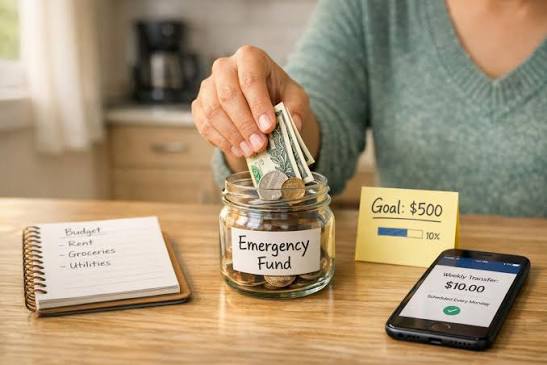
Before the month begins, assign money to:
- rent or mortgage
- utilities
- groceries
- transportation
- debt minimums
- sinking funds
- emergency savings, if you are still building it
- personal spending
When money sits in a vague “leftover” pile, the loudest feeling claims it. A named job changes the decision.
A Local Reality Check: Cost of Living Changes the Pressure, Not the Definition
I write this with one assumption in mind: if you are in a higher-cost area, your emergency fund has more work to do, but that does not make ordinary expenses into emergencies.
In places with harsh winters, like Minneapolis or parts of New England, heating bills can spike. In hurricane-prone areas like coastal Florida, storm prep is predictable and should be budgeted. In cities with expensive parking, tolls, and transit gaps, transportation costs can feel endless. None of that turns a routine bill into a true emergency. It just means your sinking funds need to be sized honestly.
That is where a lot of people get stuck. “This area is expensive, so everything is emergency-worthy” sounds convincing for about five seconds. It is not. It is just a sign your budget needs more categories.
With a neighborhood where auto repair shops, plumbers, or dentists book out fast, the timing pressure can make a planned expense feel urgent. I still would not pull from emergency savings unless the expense is sudden and essential. Instead, I would keep a separate “known but timing-sensitive” fund.
That distinction saves a lot of future regret.
What to Do the Next Time You Feel the Urge
When you are tempted to raid the fund, do this in order:
- Pause the transfer.
- Name the expense out loud.
- Ask the three tests again: urgent, necessary, deferrable?
- Check whether a sinking fund already exists for it.
- If it is not a true emergency, wait 24 hours.
- If you still want it, decide whether it fits your personal spending budget instead.
I also like a simple script:
“I am not saying no forever. I am saying this money has a different job.”
That line helps because it strips out the moral drama. You are not failing. You are enforcing a rule.
When the urge comes from stress, do not treat the transfer as the only relief. Step away, drink water, take a walk, text someone, or sleep on it. A lot of “money emergencies” are really nervous system emergencies.
How to Rebuild the Fund After You Use It
Sometimes the emergency fund gets hit for a real emergency. That is what it exists for.
The mistake is letting it stay depleted while you tell yourself you will “deal with it later.”
My approach is to rebuild it with a specific plan:
- Set a temporary monthly refill amount.
- Put the refill on autopilot if possible.
- Pause lower-priority goals until the fund is back on track.
- Use tax refunds, bonuses, or irregular income to refill faster if you receive them.
If you are rebuilding after a job loss or medical expense, be realistic. Do not starve your checking account just to make the fund look full again. You need enough liquidity in daily life to avoid another drain.
And here is the trade-off, plain as day: the more money you keep in emergency savings, the less you have available for investing or other goals. That is normal. I would rather have a real emergency fund and slower investing than a fragile setup that forces me to borrow or panic later.
Red Flags That You Need a Bigger System, Not More Discipline
If any of these are true, the problem is bigger than one bad transfer:
- You use the emergency fund every month.
- You cannot name separate buckets for common expenses.
- Your checking balance is always near zero.
- You keep telling yourself “this counts” and later regret it.
- You are using the fund to cover a lifestyle you cannot actually afford.
At that point, more self-control will not fix it. You need a clearer budget, more cash flow buffer, or lower fixed expenses.
This is the part that is not for everyone: if your income is volatile, your first priority may be building a basic cash cushion, not perfectly optimizing buckets. In that case, a single emergency fund may need to serve both as crisis money and short-term income smoothing. Messy? Yes. Real? Also yes. Still, I would draw a hard line for true emergencies and keep the rest as structured cash reserves.
FAQ
What counts as a non-emergency expense?
Anything planned, expected, or optional. Monthly overspending, gifts, upgrades, travel, routine maintenance, and impulse purchases are not emergencies.
Should I ever use my emergency fund for bills?
Only if the bill is truly urgent, necessary, and not something you could reasonably plan for. A regular utility bill or subscription is not an emergency.
How do I stop myself from transferring money instantly?
Move the fund to a separate account, add a 24-hour waiting rule, and create sinking funds for repeat expenses. Friction helps.
How much should stay in checking so I do not raid savings?
Enough to cover the timing gaps in your life without getting exact to the last dollar. A modest buffer is usually better than living on the edge.
If I already used the fund, what now?
Rebuild it with a written plan, then fix the reason you used it. If you do not change the system, the same leak will keep happening.
If you want one rule to keep, make it this: your emergency fund should be boring, protected, and hard to justify touching. The moment it starts funding convenience, it stops protecting you.