Last updated: August 12, 2026
- FAQ Should I save $1,000 first before paying debt?
- A $500 repair can wreck a budget in one afternoon.
- A $500 to $1,000 buffer can stop one problem from becoming fresh borrowing.
- Key Facts A $500 buffer can cover many small emergencies without new debt.
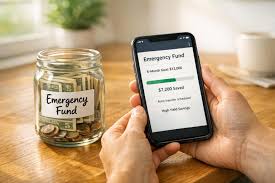
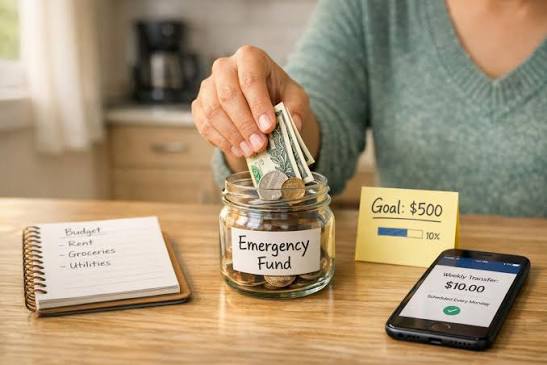
A $500 repair can wreck a budget in one afternoon. So the question “should you save for debt or emergency fund first on a low income?” has a fairly blunt answer: build a small starter emergency fund first, then go after high-interest debt. A $500 to $1,000 buffer can stop one problem from becoming fresh borrowing. This is information, not financial advice, and a qualified adviser should look at your own situation.
Quick Answer
Quick Answer: On a low income, a $500 starter emergency fund is often the first step, then debt payoff gets the extra cash. When debts are already forcing missed essentials, get professional help early. The best order is the one that reduces the chance of the next crisis.
Key Facts

- A $500 buffer can cover many small emergencies without new debt.
- A $1,000 emergency fund is a common starter goal, not a requirement.
- High-interest debt can keep growing while you save, so the order matters.
- One surprise bill would push you back into borrowing, cash first is often safer.
- Your income is stable and you already have some savings, debt first may make more sense.
- For personalized help, check the Consumer Financial Protection Bureau or MoneyHelper.
I write about personal finance for readers who are trying to make one paycheck do two jobs: cover today and keep tomorrow from breaking them. Honestly, that makes this less like a theory question and more like a risk question.
The Real Difference Between Paying Debt First and Building an Emergency Fund First
Not discipline. Not security. The real split is simpler: which problem are you trying to stop?
Debt first works best when the balance is expensive and climbing fast. Each extra payment can trim future interest, and that matters when what you owe is heavy relative to income. But here’s the catch — debt payoff gives you no cash cushion. A car repair, a cut in hours, and suddenly you may be borrowing again. Nasty little loop.
Emergency fund first works best when life is shaky. One flat tire, one prescription, one missed shift — when any of those would push you back into credit cards, a small cash pile can block the whole mess. According to the Federal Reserve’s 2023 Economic Well-Being of U.S. Households report, many adults still struggle to cover a modest emergency, which is why even a small cushion can matter. The downside is easy to feel: savings can seem “unproductive” while interest charges keep staring at you. Fair point.
On a low income, I do not really see this as a clean either/or for most people. Better to build a tiny starter buffer, then make debt the main target. That gives you a little slack for a small shock without adding new debt, while still shrinking the balance that is draining you.
Scale is the whole trick. A giant emergency fund is unrealistic when every dollar already has a job. An all-out debt attack can fall apart when life gets messy. The better choice is usually the one that keeps you from re-borrowing.
Emergency Fund First: Who Should Actually Use This, and Who Shouldn’t

Emergency fund first fits the person living on the edge. I mean the reader whose budget has no spare room and whose finances can be knocked sideways by one small interruption. When you do not have enough cash to absorb a basic repair, a copay, or a short gap in income, I would prioritize a starter emergency fund before sending every spare dollar to debt.
Cash has a defensive job. It keeps you away from a credit card, overdraft, payday lender, or another high-cost fallback when life happens. It also buys breathing room, which can matter emotionally as much as mathematically. When you are always one problem from panic, a modest cushion can make the rest of the plan possible.
But there is a trade-off. Debt reduction slows down. When your debt carries a very high rate, waiting costs money. Real money. More months of strain, more total interest, and a longer stretch before your budget loosens.
I would skip emergency-fund-first as the whole strategy when your debts are mild, your job is steady, and you can handle a small surprise without borrowing. In that case, a tiny savings buffer may still make sense, but it should not turn into a reason to ignore the debt.
The other group that should be careful here is anyone who empties savings the second it appears. When money in the bank keeps vanishing into non-emergencies, “save first” becomes a delay tactic. For those readers, automation and hard rules matter more than the account label.
Paying Debt First: The Specific Situations Where It Wins
Debt first wins when the debt itself is the emergency. That sounds harsh, but on low income it is often true. When the balances are climbing quickly and the minimums are already squeezing the budget, cutting the debt may be the only move that brings real relief.
This is especially true when you already have a small cushion. When a minor surprise would not force new borrowing, then attacking debt first can break the cycle faster. I also think debt first suits readers who are organized and unlikely to reach for credit again. For them, every extra dollar aimed at debt is a dollar not feeding interest.
Speed is the strength here. Money sent to debt can improve cash flow over time by shrinking required payments. That can make the month feel less tight. It also gives momentum, which some readers need more than a savings balance sitting there untouched. A credit card balance, for example, can shave the minimum payment down over time — not by magic, just by math.
The downside is fragility. When an emergency hits before you have any savings, you may have to borrow again. That can wipe out the progress you just made. I would not recommend pure debt-first when you live with unstable hours, irregular income, medical uncertainty, or transportation risks that can cut off your ability to earn.
So the debt-first path is not “send every extra dollar to creditors and hope.” It is for readers whose budget already has some shock absorption and whose main threat is expensive debt, not an immediate cash crisis. The goal is to avoid paying twice.
The Honest Side-by-Side
Here is the decision table I would use if I were looking at this from a low-income budget and trying to choose the less dangerous option.
| Criteria | Save for emergency fund first | Pay debt first | Winner for this condition |
|---|---|---|---|
| Risk of a small surprise expense | Builds a cushion before the next bill hits | Leaves you exposed unless you already have cash | Emergency fund first |
| High-interest debt pressure | Interest keeps accruing while you save | Reduces balances sooner | Debt first |
| Irregular income | Gives breathing room between paychecks | Can leave you forced to borrow again | Emergency fund first |
| Existing savings already in place | May duplicate protection you already have | Uses extra cash to reduce debt burden | Debt first |
| Likelihood of re-borrowing from savings | Can fail if money gets spent casually | Avoids “saving” that gets drained | Debt first |
| Emotional stress from having no cash buffer | Usually lowers panic and improves stability | Can feel too tight and fragile | Emergency fund first |
| Cash flow improvement over time | Slower | Faster if debt balances are reduced | Debt first |
| Risk of missing minimum payments | Can help prevent crisis borrowing | Can be dangerous if debt is already stretched | Emergency fund first |
| Budget discipline under pressure | Better if the money stays untouched | Better if extra cash would otherwise be spent | Depends on your behavior |
| Total plan durability | Stronger for unstable lives | Stronger for stable lives with expensive debt | Depends on job and income stability |
The table only works if you are honest about your own reality. A reader with a stable paycheck but bad spending habits may think they need savings first. A reader with unstable work hours may think debt payoff is the responsible move. Both can be wrong when they ignore what happens when something breaks.
One detail generic articles often miss: the winner can change by type of debt. High-interest revolving debt behaves differently from a fixed payment on a lower-cost loan. I am not telling you what to buy, sell, or hold here; I am saying the speed and cost of the debt matter when you choose the order.
Our Verdict: Which One to Choose and Why
Choose emergency fund first when you have no cash buffer, your income is shaky, and one unexpected expense would force you to borrow again. Choose debt first when you already have a small cushion, your income is stable enough to absorb minor surprises, and your debt is the main thing choking your budget. Neither if you are using either choice as a reason to avoid making any plan at all.
My actual recommendation for most low-income readers is this: build a small starter emergency fund first, then move hard on debt. Not a large fund. Not months of expenses. Just enough cash to stop a tiny shock from becoming new debt. After that, debt reduction usually deserves the main share of your spare money.
Why I make that call: low-income households are often hurt more by disruption than by mathematical perfection. A payment plan that works only until the first flat tire is not a good plan. At the same time, a huge savings goal can turn into permanent delay when the budget is too tight to support it. The starter-fund-first-then-debt path is a compromise, but it is a practical one.
When you absolutely cannot save anything without missing required payments, debt may need to wait while you stabilize the budget. That is not failure. It is triage. When you cannot cover basic necessities, it is worth speaking with a qualified credit counselor, nonprofit debt adviser, or financial professional in your country to review options and local rules. Debt, tax, and benefit rules differ by country and change often, so check your local authorities as well, such as the Consumer Financial Protection Bureau in the U.S. or the MoneyHelper service in the U.K.
When to Reconsider This Choice Entirely
There are a few cases where the usual answer flips.
First, when your debt is already in collections, threatened by legal action, or causing missed housing, utility, or work-related payments, the decision is not really “save or debt.” The first task is to stop the most damaging consequence.
Second, when you have a strong support system that can cover a true emergency without interest or fees, you may be able to push more aggressively on debt. That is not the same as having money in the bank, but it changes the risk.
Third, when your income is so unstable that you cannot predict next month at all, a starter emergency fund may need to come before any meaningful debt attack. In that case, the buffer is not a luxury; it is a tool for staying employed and housed.
Fourth, when your debt payments are already crowding out essentials, review the whole budget before forcing a simple split between savings and debt. A payment arrangement, hardship option, or nonprofit counseling route may be more useful than trying to force a simple answer onto a complicated problem.
How I Would Think About It on a Low Income
I would ask three questions.
Can one surprise expense push me back into debt? If yes, I want a starter emergency fund.
Do I already have some cash cushion? When the answer is yes, debt can move to the front.
Is my income stable enough that I can survive without savings for a while? If yes, debt payoff becomes more attractive.
That is the real test. Low income does not automatically mean emergency fund first or debt first. It means your margin for error is thin, so the order has to protect the next month, not just improve the spreadsheet.
FAQ
Should I save $1,000 first before paying debt?
Not necessarily. A fixed dollar target may be too high for a low-income budget. A smaller starter buffer can be more realistic when your goal is simply to avoid borrowing for a minor emergency.
If I have credit card debt, should I ignore savings until it is gone?
I would not ignore savings completely. When you have no cushion at all, even a small emergency fund can keep you from adding more expensive debt when something breaks.
What if I keep dipping into savings?
Then savings-first may not be the right structure for you yet. You may need a separate account, automatic transfers, stricter rules, or help from a counselor to make the money stay put.
Is debt payoff always better because of interest?
No. Interest matters, but so does cash flow. When the lack of cash would push you back into borrowing, a small emergency fund can save you from a worse cycle. A financial counselor can help you compare the tradeoffs.
What if I can only save or pay debt in tiny amounts?
Tiny amounts still matter. The important part is choosing the order that prevents the next crisis. On a low income, consistency and damage control usually beat dramatic moves.