Last updated: October 21, 2026
Quick Answer: For most households, emergency fund storage and access work best when about 1 to 3 business days of money sits in a separate, insured savings account, while a smaller cash or checking buffer covers same-day needs. In Emergency fund storage and access — The Complete Guide, the goal is to keep the money reachable without making it easy to spend.
Your emergency fund should be easy to reach in a real emergency and hard to spend on a whim. A separate, insured savings account that can be moved to checking within 1 to 3 business days is usually a strong setup, along with a small cash buffer at home for same-day needs.
What emergency fund storage and access should actually solve
Emergency fund storage and access should solve two problems at once: it must protect the money from impulse spending, and it must let you pay a bill fast when the car dies, the furnace quits, or you lose a paycheck.
That sounds simple, but the wrong storage choice creates friction at the exact moment you need speed. Money locked in a CD with a 12-month term can take a penalty to break. Money left in your checking account can quietly disappear into groceries, rideshares, and “I’ll pay myself back later.” Money kept only as cash can be stolen, burned, or useless for a $1,800 repair shop invoice that wants a card or transfer.
The practical target is this: keep most of the fund in a place that is safe, liquid, and separate from daily spending. Then keep a smaller amount where you can touch it in minutes. For many households, that means one high-yield savings account, one linked checking account, and perhaps $200 to $1,000 in cash at home depending on comfort level and local risk.
A generic article often says “just keep it accessible.” That leaves out the real trade-off. If access is too easy, discipline breaks. If access is too hard, the fund fails during the emergency. The right answer is not one storage method forever; it is a layered setup that matches the kind of emergency most likely to happen. For readers comparing options, how high-yield savings accounts work, checking accounts and cash management, and building an emergency fund are the most relevant starting points.
What is the safest place to keep an emergency fund?
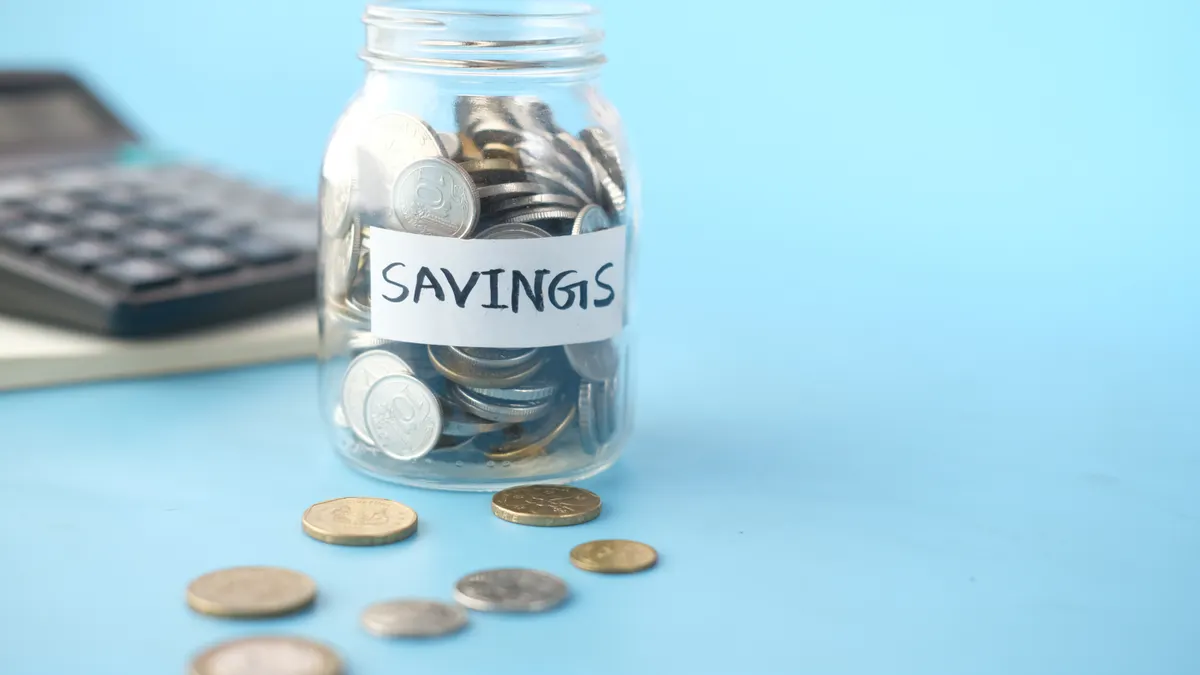
The safest practical place to keep an emergency fund is usually a separate FDIC-insured or NCUA-insured savings account, ideally with no monthly fee and no debit card attached.
That gives the money three advantages. First, it stays legally separated from everyday spending. Second, deposits at banks insured by the FDIC are generally protected up to $250,000 per depositor, per insured bank, for each ownership category; credit union deposits insured by the NCUA follow the same $250,000 standard. Third, transfers from savings to checking are simple enough for most real emergencies.
A high-yield savings account is usually the cleanest choice for the main fund. It keeps money liquid without inviting casual use. A money market account can work too, but the label matters less than the actual terms: fee, minimum balance, transfer speed, ATM access, and insurance coverage. A brokerage cash sweep or money market mutual fund can be useful for some savers, but those are not the same as deposit insurance, and they add complexity that many people do not need for an emergency reserve.
For readers who want the underlying consumer guidance, the FDIC deposit insurance page and the NCUA share insurance page explain the protection rules directly.
A few storage options are usually worse than they look:
- Checking account only: too easy to drain.
- Cash at home only: exposed to theft, fire, and simple loss.
- CD ladder only: decent for planned use, poor for urgent access.
- Invested in stocks or equity funds: too volatile for money that may be needed next month.
The right place also depends on your job stability. Someone with irregular income may value same-day access more than a slightly higher yield. Someone with a stable salary may prioritize keeping the fund as separate and boring as possible.
If you want the strict rule, use this: the emergency fund should be boring, insured, and not tied to market swings. That rule is wrong only for a tiny slice of readers who already have six-figure liquid reserves and know exactly how their brokerage sweep, money market fund, and bank transfer chain works.
How much of your emergency fund should be immediately accessible?
Most people should keep only a portion immediately accessible, then keep the rest one transfer away.
A useful split is to keep about one to two weeks of bare-bones expenses in checking or as cash, with the rest in savings. If your income is unstable, that front-end buffer may need to be larger. If you have a strong credit line, reliable health coverage, and very predictable bills, the immediate buffer can be smaller, but not zero.
Then think in layers:
- Layer 1: same-day money. This covers a tow, a prescription, a transit pass, or a small home repair. Many people keep this as cash or in checking.
- Layer 2: 1 to 3 business day money. This is the main emergency fund in a savings account. It should be easy to transfer to checking.
- Layer 3: slow money for larger planned shocks. This might be in a CD ladder or short-term Treasury bills if the household has a larger cash cushion and can wait a few days.
The point is not to maximize yield on every dollar. The point is to reduce the chance that you borrow on a credit card at 24% APR because your emergency money is “somewhere” but not reachable until next Tuesday.
A common mistake is keeping the entire fund in checking because it feels accessible. That usually backfires. Another mistake is putting everything into a high-yield savings account with no checking link and no debit card, then forgetting that some emergencies require immediate payment. A roof leak at 9 p.m. does not care that your transfer will clear on Wednesday.
If you are building the fund from zero, start with cash flow and access, not optimization. Get $500 to $1,000 parked in a reachable place first. Then grow it to one month of expenses, then three, then more if your situation calls for it.
Which emergency fund storage method fits which situation?

The best storage method depends on how fast the money must move, how disciplined you are, and how much hassle you can tolerate.
| Storage method | Best for | Typical access speed | Main drawback | Typical cost or frictions |
|---|---|---|---|---|
| Checking account | Immediate bills and cash flow gaps | Same day | Too easy to spend | Possible monthly fees if minimums are not met |
| High-yield savings account | Main emergency reserve | 1 to 3 business days | Not instant for every payment | Transfer limits and possible rate changes |
| Money market deposit account | Saver who wants limited access plus yield | Same day to 3 business days | Rules vary by bank | Minimum balance, fee, or transaction limits |
| Cash at home | Power outage, card outage, tiny urgent costs | Immediate | Theft, fire, loss | No interest, no protection from physical loss |
| CD ladder | People with large reserves and planned liquidity windows | Days to months | Early withdrawal penalties | Rate locked, access constrained |
| Treasury bills | Larger reserves with federal backing features | Days to maturity or sale | More complex than savings | Requires brokerage or Treasury account setup |
| Brokerage cash sweep / money market fund | Invested households with experience | Usually quick, but not always instant | Not the same as bank deposit insurance | Settlement rules and market-based behavior |
This table hides an important point: access speed is not just about your bank. It also depends on where the emergency happens. A landlord may want a wire or cashier’s check. An auto shop may take debit or card. A hospital may bill later. A contractor may want half upfront. Different emergencies need different rails.
For most households, the simplest answer is a two-account setup: checking for immediate use and a separate savings account for the main reserve. That is the setup I would recommend to someone who wants maximum usefulness with minimum moving parts. For readers who want to compare cash-flow tools, money market accounts and CDs can help, but they are usually supporting pieces rather than the core setup.
It is not the best fit for someone who routinely keeps large balances, earns interest across several institutions, or manages cash flow for a business. In that case, a more layered system can make sense, but only if the owner is comfortable monitoring transfer timing and account terms.
How to store an emergency fund so you can reach it fast but not too fast
Store the fund at a separate institution, link it to checking, and remove all friction except the kind that protects you from impulse spending.
That usually means opening a savings account at a different bank or credit union from the one you use for everyday spending. A separate institution adds a useful delay: you can move money when you mean to, but you are less likely to raid it while buying takeout. Many people find that small barrier helps more than any spreadsheet rule.
Use these access rules:
- Link the savings account to one checking account.
- Enable online and mobile transfers.
- Keep the savings account off your debit card if possible.
- Set alerts for withdrawals above a threshold such as $100 or $250.
- Write down login recovery steps and store them securely.
If your bank offers scheduled transfers, set one monthly transfer from checking to savings. That automates the build-up phase and reduces the odds that the fund stalls at $847 for a year.
For larger emergencies, check transfer and payment limits before you need them. Some banks cap external transfers, same-day push transfers, or Zelle-style movement. Those limits matter if you are trying to cover a $4,000 roof repair quickly. It is better to know the ceiling before the shingles peel off.
If you want to keep some money in cash, store it in a fire-resistant safe that is bolted down and hidden from casual view. A UL-rated safe is better than a decorative box or kitchen envelope, but even a safe is not perfect. Cash can still be destroyed, so treat it as a convenience buffer, not the whole plan. For practical storage, personal safes and home security are worth reviewing before you decide where to keep paper cash.
One hard truth: fast access and maximum safety pull against each other. Cash is fast but vulnerable. Savings is safer but slower. Brokerage accounts may be liquid but can be exposed to market movement or settlement delays. The smartest setup accepts that no single place does everything.
Should you keep emergency cash at home?
Yes, but only a small amount, because cash solves same-day problems and creates its own risks.
A home cash reserve is useful for power outages, card network problems, tolls, transit, small repairs, and situations where a vendor wants immediate payment. Many households keep somewhere between $100 and $1,000 in small bills, with the right amount depending on travel, local risk, and comfort level.
The drawbacks are real. Cash earns nothing. It can be lost, stolen, or damaged. If you keep too much, you may also start treating it like spending money. That defeats the purpose.
If you decide to keep cash at home, use practical habits:
- Keep bills in a safe place, not loose in a drawer.
- Use smaller denominations so the money is useful in a utility outage or for tipping, parking, or transit.
- Replenish it only when you intentionally spend from it.
- Do not tell casual visitors or neighbors where it is kept.
- Consider a fire-resistant safe if the amount is meaningful to your household.
Do not rely on home cash for the full emergency fund unless your situation is unusually cash-based and you fully accept the theft and fire risk. Most people are better off treating cash as the front pocket of the system, not the wallet.
For readers in areas with frequent storms, grid issues, or banking disruptions, a modest cash buffer makes more sense. For readers in dense urban housing with higher theft risk, the buffer should usually be smaller.
What fees, transfer rules, and tax issues matter most?
The main things to check are monthly fees, transfer limits, early withdrawal penalties, and whether your account is actually insured.
A lot of people focus on interest rate and ignore the plumbing. That is backward. An emergency fund account with a slightly lower yield but no monthly fee and reliable transfers is often better than a higher-rate account that charges you for falling below a balance threshold. A $5 or $10 monthly fee quietly eats away at small funds.
Before you open or move money, check these details:
- Monthly maintenance fee: Is there a balance requirement to waive it?
- Excess transfer rules: Some savings accounts limit certain transfers or withdrawals.
- Early withdrawal penalties: CDs can charge you interest if you break the term.
- Insurance status: Confirm FDIC or NCUA coverage for bank or credit union deposits.
- External transfer timing: Ask how long ACH transfers usually take.
- Wire fees: Some banks charge for outgoing wires, which can matter in a large emergency.
- Account access after hours: Mobile app availability and debit card use can matter during weekends and holidays.
Tax treatment is usually simple for deposit accounts. Interest earned in savings is generally taxable income in the year it is credited or made available, and you may receive a Form 1099-INT. If the money is in Treasury bills or other investments, the tax rules can differ. Because tax rules and personal situations vary, it is sensible to confirm details with a tax professional if the account structure is more complex than a plain savings account.
One important rule: do not hold emergency money in an account just because it pays a higher advertised rate if the account has hidden friction. For emergency cash, reliability beats yield. The yield difference on a modest fund is usually small compared with the cost of one late fee, one overdraft, or one credit card balance carried for a month.
For authority on account insurance and consumer protections, the FDIC’s deposit insurance guidance and the Consumer Financial Protection Bureau’s banking resources are worth reading. The National Credit Union Administration publishes similar insurance information for credit unions. The Consumer Financial Protection Bureau also has plain-language material on checking and savings accounts.
How to organize emergency fund access with a spouse, partner, or family member
The best setup is one that another trusted adult can use in a real emergency without asking three people for passwords.
Shared households get tripped up by access more often than by storage. One partner knows the bank login. The other knows the debit card PIN. A parent knows the savings account exists but not how to move funds on a Sunday. That is a planning failure, not a money failure.
A simple system works better:
- Keep at least one account both adults can access legally and practically.
- Store login recovery information in a secure password manager or other protected system.
- Agree on what counts as an emergency before it happens.
- Decide who can move money, who can approve it, and under what threshold.
- Keep a paper or digital note of the bank name, routing information, and account purpose in a secure location.
If you have dependents, make the system understandable enough that a spouse, adult child, or executor can find it quickly. That does not mean sharing every password with everyone. It means making the money findable and usable when life is messy.
Because this is really about continuity, not convenience, many households should also keep beneficiary forms, account notes, and a current list of institutions in the same secure place as other important records. Estate planning basics and beneficiary designations matter here because they affect who can actually reach the money when circumstances change.
This is also where many generic guides fail. They talk about “financial independence” and ignore the reality of shared bills, caregiving, and sudden absence. An emergency fund is not only a math problem. It is an access-control problem.
For households with more complex needs, consider naming a trusted person on relevant accounts if the institution allows it, or using an account structure that permits joint access. If that sounds too formal, remember that “I know where the password is” is not a plan.
When should you change your storage setup?
You should change your emergency fund storage setup whenever your life changes faster than your account terms.
A good trigger list includes:
- a new job or irregular income,
- moving to a different state or city,
- buying a car or home,
- getting married or divorced,
- having a child,
- taking on caregiving responsibilities,
- opening or closing a business,
- moving from renting to owning,
- or seeing your emergency fund grow beyond the amount you can easily keep in one place.
The reason is simple. The right setup for a $2,000 fund is not the right setup for a $20,000 fund. A small fund often belongs in one savings account plus a checking buffer. A larger reserve may justify splitting money across institutions so you stay within insurance limits and reduce operational risk.
If your fund grows, you can also divide it by purpose:
- immediate access bucket,
- major expense bucket,
- medium-term reserve,
- and long-term backup.
That does not mean turning the emergency fund into a portfolio. It means not forcing one account to do four jobs poorly.
The same logic applies when interest rates change. If a savings account rate drops but the transfer process still works and the fee structure stays clean, the account may still be good enough. If the bank changes fees, raises transfer friction, or weakens service quality, it may be time to move the money.
The right question is not “Is this account perfect?” The right question is “Can I get cash fast enough, without turning the emergency into a second problem?”
Key takeaways
- Keep most emergency money in a separate insured savings account, not mixed with daily spending.
- Hold a smaller buffer in checking or cash so you can pay for same-day problems.
- Choose access speed based on the kind of emergency most likely to hit your household.
- Watch fees, transfer rules, and insurance more closely than the advertised interest rate.
- A layered setup usually beats a single “best” place for all the money.
- The best storage plan is the one another trusted adult can actually use under stress.
Final verdict: the simplest setup wins for most people
The simplest setup is usually the best one: a separate savings account for the main fund, a checking account for immediate use, and a small cash buffer for the rare moment when digital payment fails.
That answer is not glamorous, but it works. It avoids market risk, keeps the money available, and adds just enough friction to stop casual spending. It is wrong for people with large, complex balances who need advanced cash management, and it is wrong for anyone who thinks “accessible” means “spendable.” The fund’s job is to survive the emergency, not to feel exciting.
If the money is hard to find, hard to move, or easy to raid, the storage plan is failing. If it is too scattered, too invested, or too hidden, the access plan is failing. The right emergency fund sits in the narrow middle: safe enough to stay there, fast enough to help when the roof leaks, the transmission goes, or the paycheck is late.
Drafted with AI; not yet reviewed by a person.